Leaders Opinion
The Impact of Global Conflicts and Disruptions on Supply Chain Networks

Supply chain is the one, which is impacted largely due to various factors in last decade which includes geo-political situation and Technology advancement in supply chain like AI, ML, Business Analytics, Industrial automation so on…
Companies are investing large amounts in supply chain automation. Organisation are investing in automation of their warehouses, transporter systems, while much focus is allocated using data for real time decisions... they are investing optimizing inventory levels making it near real time, building strategic inventories of commodity and non-commodity using AI enabled prediction models, companies are investing in supply chain to optimize blue collar workers, Technology is being used to derisk the geopolitical impact to the maximum extent possible though it can’t be fully nullified…
Today, disruption is not an outlier event; it is as if continuous process. Geopolitical tensions, pandemics, climate events, and economic volatility have fundamentally altered the operating environment.
This has largely resulted supply chains undergoing a structural shift—from linear, cost-driven systems to intelligent, adaptive networks.
What distinguishes leading organizations now is not how efficiently they operate in stable conditions, but how effectively they perform under stress. Supply chain resilience, powered by digital intelligence, has become a defining capability—and increasingly, a competitive advantage.
The Impact of Global Conflicts and Disruptions on Supply Chain Networks
Supply chains that once thrived on geographic concentration and cost arbitrage are now being reshaped by geopolitical realities. Developing countries are focusing on self-reliant the way our “Make in India” …
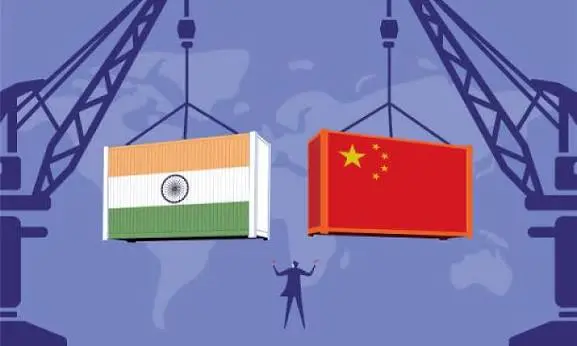
Trade disputes, sanctions, and shifting political alignments have introduced a new layer of uncertainty. Organizations that depended heavily on specific regions for critical components have found themselves exposed to sudden policy changes and supply interruptions. The concentration of manufacturing in select geographies as shifted from strategic strength to risk.
War, Geo-politic tension, policy shift by developed countries, Pandemic etc are amplified these vulnerabilities. Just-in-time systems, designed for efficiency, struggled to cope with abrupt demand fluctuations and widespread supply constraints. Factory shutdowns, labor shortages, and logistics bottlenecks disrupted even the most sophisticated networks.
Port congestions and container shortages became global headlines, revealing the extent to which supply chains had become interdependent—and fragile.
Energy and commodity volatility further complicate the landscape. Fluctuating raw material costs affect not only bottom line but also availability, forcing organizations to rethink procurement and pricing strategies in real time.
In this environment, the traditional focus on cost optimization is no longer sufficient. Organizations are adopting a more nuanced approach—balancing efficiency with resilience. This includes diversifying supplier bases, regionalizing supply networks, and building strategic inventory buffers for critical materials.
The objective is not to eliminate risk—that is neither practical nor possible—but to design systems that can absorb shocks and recover quickly. In essence, resilience is becoming a core design principle rather than a reactive measure.
The Role of Technology and Digital Transformation in Strengthening Supply Chains
World has witnessed for many decades that if disruption defines the challenge, technology defines the response. Digital transformation is fundamentally reshaed the supply chains and process is continuing, enabling organizations to transition from reactive operations to predictive, intelligence-driven systems.
Conference

Conference

At the heart of this transformation lies data—its availability, its accuracy, and its intelligent application. Advanced analytics and artificial intelligence are enabling organizations to process vast volumes of data and convert them into actionable insights. This shift is redefining how decisions are made across the supply chain.
One of the most significant impacts is in demand forecasting and working capital optimization. Traditional forecasting methods, often based on historical averages and some legacy algorithm which merely consider manmade inputs of demand spike during festive or schemes or discount so on… however; now AI-driven models that incorporate real-time signals, market trends, and external variables. This allows organizations to anticipate demand with greater precision and align procurement and production accordingly.
The implications for working capital are substantial. By reducing forecast errors, organizations can minimize excess inventory while avoiding stockouts. Dynamic inventory models enable real-time adjustment of safety stock levels, ensuring that capital is deployed efficiently. Instead of being locked in warehouses, working capital becomes more fluid—supporting growth and strategic investments.
Parallel to this is the transformation of warehouse infrastructure and technology. Warehouses are no longer static storage facilities; they are evolving into highly efficient, technology-enabled fulfilment canters. Modern warehouse management systems provide real-time visibility into inventory, enabling optimized storage, faster retrieval, and improved throughput.
This directly impacts the cost of inventory holding. Better space utilization, faster inventory turnover, and reduced obsolescence contribute to lower carrying costs. In a sense, technology is converting warehouses from cost centers into performance hubs that actively contribute to supply chain efficiency.
Automation is taking this transformation a step further. The adoption of robotics for automated picking and put away, automated storage and retrieval systems, and intelligent material handling solutions is redefining warehouse operations. These technologies enhance speed, accuracy, and consistency, particularly in high-volume environments.
More importantly, they address a critical structural challenge—dependency on manual labour. By automating repetitive and labour-intensive tasks, organizations can optimize workforce costs while improving operational reliability. Human resources can be redeployed toward supervisory, analytical, and exception-handling roles, creating a more balanced and resilient workforce model.
However, the real breakthrough lies in integration and connectivity across the supply chain ecosystem. Modern organizations are breaking down silos by integrating internal systems—such as ERP, warehouse, and transportation platforms—with external partners, including suppliers, logistics providers, and customers.
This level of integration enables real-time information exchange, which is transformative. Organizations gain end-to-end visibility into their supply chains, allowing them to monitor shipments, track inventory, and respond to disruptions as they occur. For customers, this translates into greater transparency—accurate delivery timelines, proactive updates, and consistent service levels.
In today’s experience-driven economy, this capability has a direct impact on customer satisfaction. Reliability and visibility are no longer optional; they are expected. Supply chains are increasingly becoming an extension of the customer experience, influencing brand perception and loyalty.
The emergence of decision intelligence platforms further enhances this capability. These systems provide a centralized view of the supply chain, combining data from multiple sources into a unified interface. They enable real-time monitoring, predictive analytics, and automated decision-making, significantly reducing response times.
Complementing this is the use of digital twins, which allow organizations to simulate different scenarios and evaluate their impact before implementation. Whether assessing alternative sourcing strategies or preparing for potential disruptions, these tools provide a level of foresight that is invaluable in an uncertain environment.
While technology cannot eliminate external risks, it plays a critical role in de-risking operations. Early warning systems, predictive analytics, and real-time monitoring enable organizations to anticipate disruptions and respond proactively. In effect, technology transforms uncertainty from a threat into a manageable variable.
Equally important is the evolving role of the workforce. Technology is not replacing human capability; it is augmenting it.
Taken together, these advancements are giving rise to the intelligent supply chain—a connected, adaptive system that continuously learns, evolves, and responds to change. In this paradigm, technology is not just an enabler; it is a strategic differentiator.
Key Strategies to Build Resilient and Adaptive Supply Chains
While technology provides the tools, resilience requires a broader strategic shift. Organizations must rethink how supply chains are designed, managed, and governed.
Diversification is a critical starting point. Reducing dependency on single suppliers or regions is essential in mitigating geopolitical risks. This does not imply abandoning global sourcing but rather complementing it with regional or local alternatives to create a more balanced network.
Inventory strategies must also evolve. The rigid application of just-in-time models has proven inadequate in volatile environments. Organizations are increasingly adopting hybrid approaches that combine efficiency with strategic buffers for critical components. This ensures continuity without significantly compromising cost.
End-to-end visibility remains foundational. Without real-time insights, organizations are forced into reactive decision-making. Investments in integrated data platforms and control towers enable proactive management and faster response to disruptions.
Another key focus area is decision intelligence. Organizations are moving beyond descriptive analytics toward predictive and prescriptive models that recommend optimal actions. This reduces decision latency and enhances accuracy, particularly in complex scenarios.
Collaboration across the ecosystem is equally vital. Resilient supply chains are built on strong partnerships with suppliers and logistics providers. Sharing data, aligning incentives, and jointly planning for contingencies can significantly improve responsiveness.
The role of the workforce must also be reimagined. Technology should be leveraged not only to automate tasks but to enhance human capability. Training, upskilling, and the adoption of digital tools are essential in building a workforce that can operate effectively in a technology-driven environment.
Sustainability is emerging as a strategic imperative. Supply chains that are environmentally responsible tend to be more efficient and less exposed to regulatory and resource-related risks. Incorporating sustainability into supply chain design is therefore both a risk mitigation strategy and a value driver.
Finally, organizations must institutionalize scenario planning and stress testing. Regularly evaluating supply chains against potential disruptions—whether geopolitical, environmental, or economic—ensures preparedness and reduces response time during actual events.
The Shift from Efficiency to Intelligence
The evolution of supply chains over the past decade reflects a broader shift in how organizations approach uncertainty. Efficiency, while still important, is no longer the sole objective. Resilience, agility, and intelligence have become equally critical.
In many ways, supply chains have moved from being operational backbones to strategic nerve centers. They influence not only cost and service levels, but also customer experience, risk management, and long-term competitiveness.
The organizations that will lead in this new era are those that recognize this shift and act decisively. By embracing digital transformation, diversifying risk, and fostering collaboration, they can build supply chains that are not only robust but also adaptive.
Disruption will continue to define the global landscape. The question is not whether it will occur, but how prepared organizations are to respond.
The future belongs to those who can move beyond managing supply chains to orchestrating intelligent networks—systems that anticipate change, adapt in real time, and convert uncertainty into opportunity.
Explore the latest edition of Journal of Supply Chain Magazine and be part of the JOSC News Bulletin.
Discover all our upcoming events and secure your tickets today.
Journal of Supply Chain is a Hansi Bakis Media brand.
Leave Comment
Join the community of 150,000+ industry professionals
Subscribe to our Daily Newsletter
Subscribe For FreeBy continuing you agree to our Privacy Policy & Terms & Conditions
Latest







Feature Articles




Related